 GENERAL MISCELLANY
GENERAL MISCELLANY
GENERAL MISCELLANY
 Not All Humor
 “Wears” Real Well . . .
  Lochore, Robert. Margaret and the minister, a true tale. Glasgow: Pr. for the booksellers, [1840?]. 12mo. 8 pp.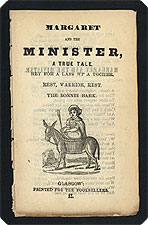
• NSTC 2M14137. Removed from a nonce volume. Pages clean. (16756)
 For CONDUCT Books?! — click here. For SCOTLAND & SCOTS, click here. For more CHAPBOOKS, click here. For more “GIFTABLES” — mostly $150


Humane Understanding Locke, John. An essay concerning human understanding ... the seventh edition, with large additions. London: A. & J. Churchill and S. Manship, 1715;
J. Churchill & Samuel Manship, 1716. 8vo (20.1 cm, 7.9"). 2 vols. I: [32], 371, [1 (blank)] pp. (lacking frontis.) II: [16], 340, [28] pp. 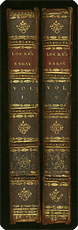
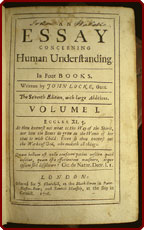
 Click the interior image for an enlargement.
 Provenance: Each front pastedown with the armorial bookplate and title-page with the early inked ownership inscription of John Waldie. A blue paper slip below the bookplate shows that this was shelved with “Natural History, Science &c.” being “No. 64.”
• ESTC T65491; NCBEL, II, 1837; Printing & the Mind of Man 164. Contemporary speckled calf, covers framed and panelled in blind with blind-tooled corner fleurons, spines with gilt-stamped leather title and volume labels, gilt-ruled raised bands, and gilt-stamped decorations in compartments; front joints cracked, back joints starting, leather chipped at spine extremities and rubbed along board edges, spines with faint traces of inked call numbers visible. First text pages each with stamped numeral in lower margin; lower edges institutionally rubber-stamped; one back free endpaper with slip. Frontispiece of vol. I lacking. Occasional early marks of emphasis in margins, some inked and some pencilled; one pair of leaves with rough edges from awkward cutting. Occasional light spotting, pages generally clean. One page with lower outer corner torn away, not touching text. Last index page adhered to back free endpaper. Actually, attractive!
For more SETS, click here. For more 18TH-CENTURY BOOKS, click here. For “PRINTING & THE MIND OF MAN,” click here. For more Books with SPECIAL For Books for the BUSTED
 Separation of Church & State — RELIGIOUS LIBERTYFirst Collected Edition Locke, John. Letters concerning toleration. London: A. Millar, H. Woodfall, I. Whiston & B. White, I. Rivington, et al., 1765. 4to (29.5 cm, 11.6"). Frontis., [8], 399, [1 (blank)] pp.
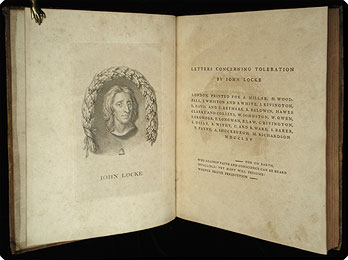 Click the images for enlargements.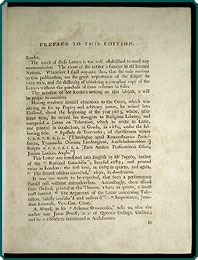
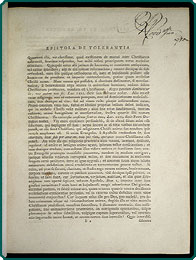
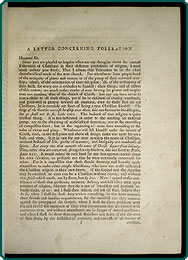
 This is a lovely, “gentleman's library” edition, well printed with generous margins.
Provenance: Two text pages and back pastedown with flourished ownership inscriptions of Richard Wood, Jr., dated 1780.
• ESTC T114245; Graesse, IV, 243; Lowndes 1380; Allibone 1113–14. Contemporary speckled calf, spine with gilt-ruled raised bands and gilt-stamped leather title-label; binding lightly rubbed/scuffed overall, joints starting from top and front hinge (inside) starting; spine with a chip and a small paper label. Front pastedown with three bookplates most tantalizingly layered over one another, the most recent being from a 19th-century social club library; front free endpaper with pencilled and inked numerals in an early hand. Pages age-toned and faintly to moderately spotted; minor offsetting from frontispiece to title-page. (26302)
For 18TH-CENTURY BOOKS, click here. For HUMAN RIGHTS, click here. For RELIGION, click here. For ENGLISH POLITICS, click here. For more Books with SPECIAL
Hippocratic AphorismsLoew von Erlsfeld, Johann Franz. Nova et vetus aphorismorum divi senis Hippocratis interpretatio iuxta mentem veterum et recentiorum in publica cathedra ingenuae juventuti medicae pragensi explanata .... Francofurti & Lipsiae: Johannis Ziegeri, 1711. 4to (21 cm, 8.25"). Frontis., [14], 1180 (i.e., 1172), [48 (index)] pp. (pagination skips 361–68, text uninterrupted).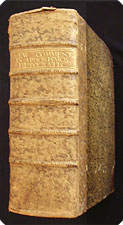
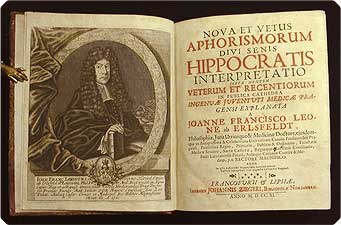 Click the interior image for an enlargement.
The title-page of this volume is printed in red and black; the engraved frontispiece portrait is signed “A.C.F.”
Scarce. Searches of OCLC, RLIN, and NUC Pre-1956 find only three U.S. and two overseas locations.
• Contemporary half mottled sheep with speckled paper–covered sides, spine with gilt-stamped leather title-label; sides and edges with a few small scuffs, leather chipped at head of spine and along parts of back joint. Front free endpaper with inked ownership inscription dated 1829 and with stamp (no other markings). Mild browning and spotting, with a few leaves more notably foxed; one leaf with ink stains. Pagination skips from 360 to 369, with text uninterrupted as shown by catchword and signature.  A stout, rather handsome volume.
For 18TH-CENTURY BOOKS, click here. For more MEDICINE, click here. For GREEK & LATIN CLASSICS, click here.
A Beautiful Edition — A Copy with a Fore-Edge Painting Longfellow, Henry Wadsworth. The poetical works of Henry Wadsworth Longfellow. London & Edinburgh: Gall & Inglis, [1865]. 8vo (18.6 cm, 7.4"). xx, 700 pp.; 6 plts.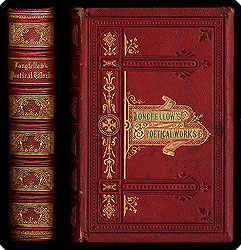
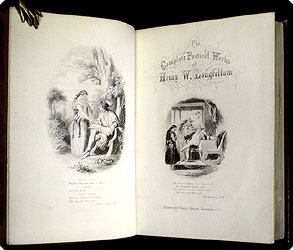 Click the images for enlargements.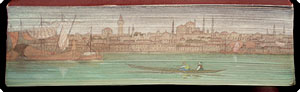
• Binding as above, minor traces of shelf wear, covers with unobtrusive small spots of discoloration, spine very slightly sunned. A few spots of light foxing. A lovely volume. (25947)
For more LITERATURE, click here. For a short “shelf” devoted to For more ILLUSTRATED BOOKS, click here. For FINE, ATTRACTIVE, & INTERESTING
Cortés Malinche & Montezuma López de Gómara, Francisco. Historia, di Don Ferdinando Cortes, marchese della Valle, capitano varlorosissimo. In Venetia: per Giouanni Bonadio, 1564. 8vo. [8], 354 of 356 ff. (lacking fol. 1 and final blank).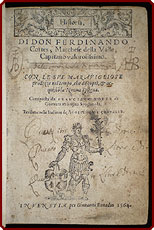
The Historia general de las Indias (first published in 1552) is divided into two parts which stand on their own although clearly written as two parts of a whole. Part I is a history of events concerning the discovery and conquests of the New World exclusive of those involving Cortés. Part II is entirely dedicated to the telling of Cortés's role in the conquest of Mexico and subsequent discoveries.
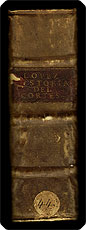
Click the images for enlargements. In this Italian translation from the pen of Agostino di Cravaliz, López's “all-Cortés” volume stands as part III of the three-volume Historia, delle nuove Indie Occidentali, with parts I and II being translations of Cieza de Leon's Historia, over Cronica del gran regno del Peru and the previously mentioned part I of Gómara's Historia general de las Indias.
The text here is printed in italic type except the capitals, which are roman. The title-page is printed in roman and italic and has the woodcut printer's device.
• Alden & Landis 564/25; Sabin 27741; Medina, BHA, 159n; Wagner, Spanish Southwest, 2v. 18th-century vellum over paste boards, soiled and a bit rubbed; red leather spine label, with a chip, and an old circular paper shelf-label. Title-page dust-soiled, mounted; small, narrow, oblong portion of blank area of title-page excised and filled in at an early time. Lacks folio 1 and final blank. Top margins closely trimmed, sometimes costing the running heads and folio numbers. (25767)
For more 16TH-CENTURY BOOKS, click here. For more BOOKS IN ITALIAN, click here. MEXICO is one of our great specialties. For more of MILITARY/NAVAL For more BIOGRAPHIES, mostly 20th-Century For more TRANSLATIONS, click here. This appears in the HISPANIC A Boston Federalist Perspective
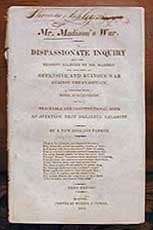
[Lowell,
John]. Mr. Madison's war. A dispassionate inquiry into the reasons alleged
by Mr. Madison for declaring an offensive and ruinous war against Great-Britain.
Together with some suggestions as to a peaceable and constitutional mode of
averting that dreadful calamity. By a New-England farmer.... Third edition.
Boston: Russell & Cutler, 1812. 8vo (20.7 cm, 8.1"). x, 3–63, [1] pp.
A Boston Federalist Perspective
[Lowell,
John]. Mr. Madison's war. A dispassionate inquiry into the reasons alleged
by Mr. Madison for declaring an offensive and ruinous war against Great-Britain.
Together with some suggestions as to a peaceable and constitutional mode of
averting that dreadful calamity. By a New-England farmer.... Third edition.
Boston: Russell & Cutler, 1812. 8vo (20.7 cm, 8.1"). x, 3–63, [1] pp.
For more PRE-1820 AMERICANA —
Sacred Hebrew Poetry Lowth, Robert. De sacra poesi hebraeorum. Oxonii: E typographeo Clarendoniano, 1775. 8vo (22.5 cm; 8.875"). [4] ff., 515, [1 (blank)] pp., [6] ff.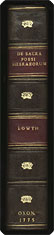
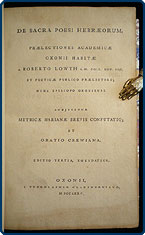
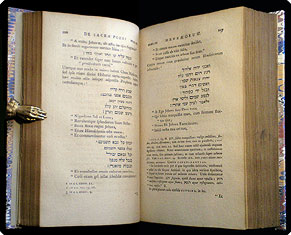 Click the interior images for enlargements.
 • ESTC T113648. Recent quarter calf, old style; raised bands, gilt ruling above and below the bands as accents, gilt center devices in spine compartments. Deep red spine labels lettered in gilt; marbled paper sides, with dark wedge of soil crossing bottom 3/4-inch of front cover’s paper and line of same soil also to turn-ins of back cover. Faint off-setting to top and bottom margins of early leaves from old binding; medium-light waterstains in margins of index (i.e., last 6 leaves), and the odd spot or bit of soil elsewhere. Generally, a very nice clean book. (25318)
For more 18TH-CENTURY BOOKS, click here. For an OXFORD “shelf,” click here.For a bit more JUDAICA / HEBRAICA, click here. For more LITERATURE, click here. For DICTIONARIES/GRAMMARS, ETC., click here.

“The
Most Perfect Specimen”
— Yep,
Strawberry-Hill!
Lucanus, M Annaeus. Pharsalia cum notis Hugonis Grotii, et Richardi Bentleii. Strawberry-Hill [Twickenham]: [Strawberry Hill Press], 1760. 4to. [2] ff., 525, [1 (blank) pp., without the “Ad Lectorem” leaf.
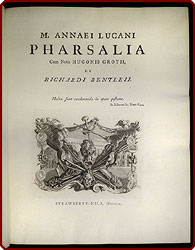
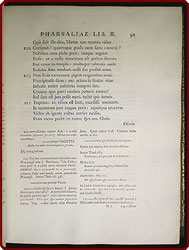
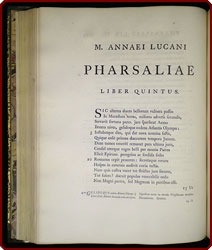 Click the images for enlargements.
  This edition consisted of only 500 copies.
Horace Walpole (1717–97), the 4th earl of Orford, is best remembered as the author of the Gothic novel The Castle of Otranto. Among bibliophiles he is also remembered for his private press, variously known as the Officina Arbutana or the Strawberry Hill Press. Walpole's almost fantastic wealth allowed him the connoisseur's luxury of this noble enterprise, which he operated in the arena of the rebirth of fine printing in Great Britain that was being carried on by the Foulis brothers, Baskerville, and others.
Binding: Contemporary sprinkled calf with a single gilt rule framing covers, rebacked and original spine reapplied; spine with raised bands, each compartment elegantly filled with tooling and each band itself gilt-accented; complementary gilt-tooled bands at top and bottom of spine; the epitome of “gilt extra” without being gaudy. Red leather spine label lettered and ruled in gilt (“LUCAN STRAWBERRY HILL”); gilt roll on board edges and on turn-ins; marbled endpapers.
Provenance: Bookplates of Charles James Packe (British, late-19th century) and H.M. Brower (American, early- to mid-20th century).
• Hazen (1973 ed.), Bibliography of the Strawberry Hill Press, 7; Dibdin (4th ed.), Introduction to . . . Greek and Latin Classics, II, 187; ESTC T11286; Schweiger, II,565. Bound as above, corners rubbed and expertly, even beautifully, rebacked; lacks the “Ad Lectorem” leaf (only). Good paper, wide margins, only the occasional instance of offsetting or soil.  A very good copy. (25974)
For more 18TH-CENTURY BOOKS, click here. For more GREEK & LATIN CLASSICS, click here.For more LUCAN, click here. For COLLECTED PRESSES Or for more Books with SPECIAL
 An
EarlyENGLISH
TranslationLucanus,
Marcus Annaeus [Lucan]. Lvcans Pharsalia: Or the civill warres of Rome,
betweene Pompey the great, and Ivlivs Cæsar. The whole tenne bookes, Englished
by Thomas May...the second edition, corrected, and the annotations inlarged by
the author. London: Thomas Iones (pr. by Aug. Mathews), 1631. 8vo (14.5 cm,
5.75"). π1a8A–S8T2; engr.
frontis., [146] ff. [with] May, Thomas. A continvation of the subiect of Lucan’s historicall poem
till the death of Ivlivs Cæser the 2d edition corrected and amended. London:
James Boler, 1633. 8vo. A–K8(-K8); [79 of 80] ff.
An
EarlyENGLISH
TranslationLucanus,
Marcus Annaeus [Lucan]. Lvcans Pharsalia: Or the civill warres of Rome,
betweene Pompey the great, and Ivlivs Cæsar. The whole tenne bookes, Englished
by Thomas May...the second edition, corrected, and the annotations inlarged by
the author. London: Thomas Iones (pr. by Aug. Mathews), 1631. 8vo (14.5 cm,
5.75"). π1a8A–S8T2; engr.
frontis., [146] ff. [with] May, Thomas. A continvation of the subiect of Lucan’s historicall poem
till the death of Ivlivs Cæser the 2d edition corrected and amended. London:
James Boler, 1633. 8vo. A–K8(-K8); [79 of 80] ff.
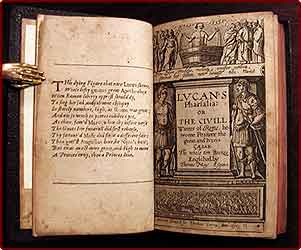
The editio princeps of the Pharsalia was printed in Rome by Sweynheym and Pannartz in 1469; Christopher Marlowe published the first English translation of any part of the Pharsalia, his rendition of the first book, in 1600, with a 1614 effort by Sir Arthur Gorges being the only other such to precede May’s standard-setting 1626 English version of books one through three.
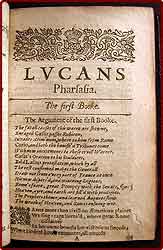 In the present volume, this great epic poem in May’s translation is
accompanied by its translator’s English rendition of his own sequel,
originally written in Latin verse. This Continuation advances the
action through Cleopatra’s seduction of Caesar (May depicts the Egyptian
queen with “snowie necke” and “golden tresses”), the
death of Cato, and various additional battles before arriving at Caesar’s
death. At the time, May’s work was thought highly enough of that Charles
I allowed the Continuation’s dedication to bear his name.
In the present volume, this great epic poem in May’s translation is
accompanied by its translator’s English rendition of his own sequel,
originally written in Latin verse. This Continuation advances the
action through Cleopatra’s seduction of Caesar (May depicts the Egyptian
queen with “snowie necke” and “golden tresses”), the
death of Cato, and various additional battles before arriving at Caesar’s
death. At the time, May’s work was thought highly enough of that Charles
I allowed the Continuation’s dedication to bear his name.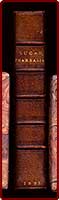
• Pharsalia: STC 16888; Schweiger, II, 567; ESTC
S108868. Continuation: STC 17712; ESTC S108892. 20th-century
black morocco in imitation of early, severe style, with raised bands from
which blind-tooling extends onto covers; spine with gilt-stamped title and
date, and turn-ins elaborately tooled in blind. Moderately worn, spine faded
not unattractively, and leather rubbed over joints. Front pastedown with bookplate,
inked date of 1986; front free endpaper with inked gift inscription dated
1944. T1-2 trimmed differently and possibly surviving from another copy;
A3 of the continuation also possibly supplied. Occasional instances of very
minor staining; mostly clean. Pleasant
on shelf and in hand.
For
more 17TH-CENTURY BOOKS, click here. For more of MILITARY/NAVAL interest, click here. For more GREEK & LATIN CLASSICS, click here. For more
ENGLISH LITERATURE, click here.For
more LUCAN, click
here.
AGAIN Lucan English’dLucanus, Marcus. Lucan’s Pharsalia: Or the civill warres of Rome, betweene Pompey the great, and Iulius Caesar. London: Pr. by A.M. for Will. Sheares, 1635. 8vo (14.7 cm, 5.8"). π1a8A–S8T2; [310] pp. [with] May, Thomas. A continuation of the subiect of Lucan’s historicall poem till the death of Iulius Caeser. London: James Boler, 1633. 8vo. 2A–2K8; [160] pp.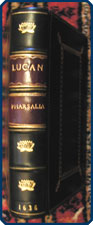
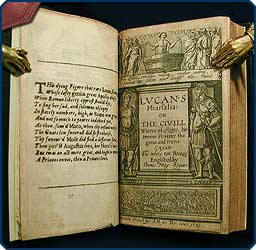
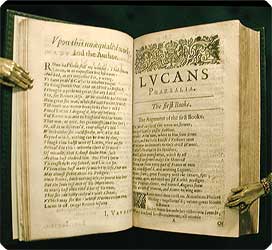 Click the interior images for enlargements.
 • ESTC S108867; STC (2nd ed.) 16889. Continuation: ESTC S108892; STC (2nd ed.) 17712. Both: Lowndes, III, 1408. Period-style calf by Grace (signed “GB” on lower back turn-in), framed and panelled in gilt rolls, spine with gilt-stamped leather title and author labels and gilt-stamped decorations in compartments. Outer and lower edges of the engraved title-page of second work shaved, touching design. Light waterstaining to upper portions of approx. 25 ff. of Continuation; small area of worming to lower inner margins of a few leaves, touching the occasional catchword but not main text.
For more 17TH-CENTURY BOOKS, click here. For more LITERATURE, click here. For more GREEK & LATIN CLASSICS, click here. For more TRANSLATIONS, click here.Or for more LUCAN, click here.
“A Valuable Edition” —
per DibdinLucanus, Marcus Annaeus. Pharsalia, cum commentario Petri Burmanni. Leidae: Apud Conradum Wishoff, Danielem Goetval, & Georg. Jacob. Wishoff, 1740. 4to (25 cm, 9.75"). [52], 735, [1 (blank)], [160 (index)] pp.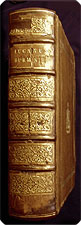
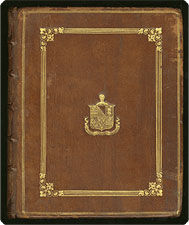
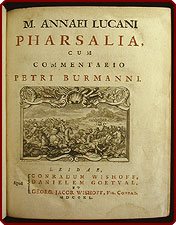
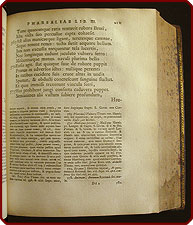 Click the interior images for enlargements.
 Binding / Provenance: Contemporary calf, framed in gilt triple fillets and panelled in gilt quadruple fillets with gilt-stamped corner fleurons and gilt-stamped central coat of arms of the Wilder family, with the motto “Virtuti moenia cedant.”
• Schweiger, II, 565; Dibdin, II, 186–87. Binding as above, rebacked making use of most of the original spine, spine with gilt-stamped compartments and gilt-stamped leather title-label; edges worn and rubbed, portions of original spine leather cracked and chipped. Front pastedown with small abraded area; front fly-leaf with inked inscriptions dated 1834 and 1938. Some leaves with faint waterstaining in upper margins and lower outer corners. Attractive.
For more 18TH-CENTURY BOOKS, click here. For more GREEK & LATIN CLASSICS, click here. For more LITERATURE, click here. For FINE, ATTRACTIVE, & INTERESTING For more Books with SPECIAL
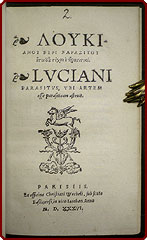
Parasites in Apotheosis Lucianus, Samosatensis. [three lines in Greek characters transliterated as] Loukianou Peri Parasitou, etoi hoti techne he parasitike, [then in roman characters] Luciani parasitus, ubi artem ese parasiticam astruit. Parisiis: Ex officina Christiani Wecheli, 1536. Small 8vo. [20] ff.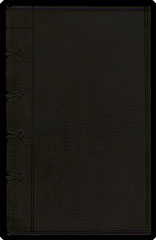
 Click the interior images for enlargements.
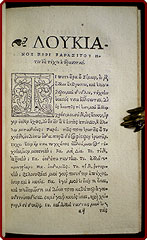
 Text entirely in elegant Greek and with but one woodcut initial. The printer's device of a Pegasus is on the title-page.
Rare: We find no copy in WorldCat or COPAC. Moreau locates one copy in the Anglo world, at the Morgan Library.
• Moreau, V, 228. Full dark modern calf old style, absolutely plain without labels; spine with raised bands accented with blind rules extending onto covers to terminate in trefoils, and simple blind double fillets to covers. One old numeral inked to title-page; text unmarked with paper clean and even bright, throughout. (25728)
For more 16TH-CENTURY BOOKS, click here. For more GREEK & LATIN CLASSICS, click here. For more LITERATURE, click here.
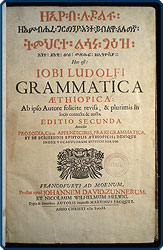
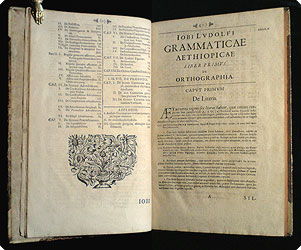
Printed Using the Author's Own Type! Ludolf, Hiob. Grammatica Aethiopica: ab ipso autore solicite revisa, & plurimis in locis correcta & aucta. Francofurti ad Moenum: Prostat apud Johannem David Zunnerum et Nicolaum Wilhelum Helwig, typis & sumtibus autoris impressit Martinus Jacquet, 1702.
Folio (31 cm; 12.125"). [6] ff., 184 pp., [4] ff.
Author's Own Type! Ludolf, Hiob. Grammatica Aethiopica: ab ipso autore solicite revisa, & plurimis in locis correcta & aucta. Francofurti ad Moenum: Prostat apud Johannem David Zunnerum et Nicolaum Wilhelum Helwig, typis & sumtibus autoris impressit Martinus Jacquet, 1702.
Folio (31 cm; 12.125"). [6] ff., 184 pp., [4] ff.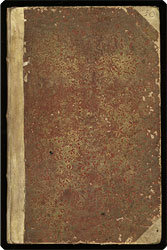
 Click the images for enlargements.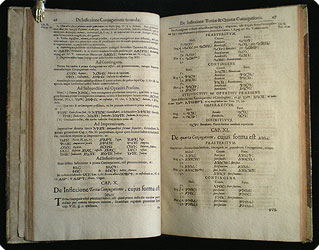
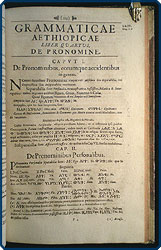
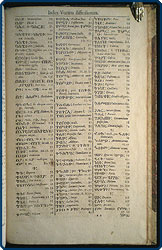 This volume was printed at Ludolf's own expense, using Ethiopic, roman, and italic types owned by the scholar himself. Just prior to the errata (one and a half pages!) is the useful “index of difficult words.”
Binding: Contemporary half vellum with embossed gilt and red paper on the boards, spine renewed with modern vellum. All edges red.
• Bound as above; overall rubbing to binding, and age-toning to the vellum and to text. Ex-library with 19th-century circular stamp on title-page and bookplate on front pastedown; paper adherence from old date slip (?) on back free endpaper. An interesting, satisfying volume. (25016)
For more 18TH-CENTURY BOOKS, click here. For DICTIONARIES/GRAMMARS, ETC., click here. For EGYPT, click here. For FINE, ATTRACTIVE, & INTERESTING For COLLECTED PRESSES
The Papal Court — As Seen by a CriticLunadoro, Girolamo. Relazione della corte di Roma e de’riti, che si osservano in esta, suoi officij, dignità, e magistrati ...nuovamente corretta, & accresciuta, con l’aggiunta del Moderno maestro di camera. Roma: Presso Michel’Angelo, e Pier Vincenzo Rossi, 1697–98. 12mo (14.3 cm, 5.6"). π8A–O12*3 2A–2G12 2H4 (-π1); [7] ff., 336, [6], 176 pp. (lacks initial blank)
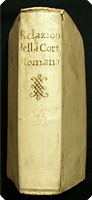
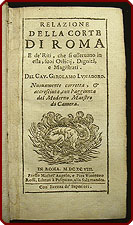 Click the interior image for an enlargement.
Francesco Sestini’s Il Moderno Maestro di Camera has a separate title-page, dated 1698; the first title-page bears the printer’s crowned salamander device and the second a vignette of Minerva. The collation here matches descriptions of other copies.
Uncommon: Searches of OCLC and RLIN locate only three copies in U.S. libraries.
Provenance: Late 18th-century private collector’s booklabel — “Ex Biblioth. Hamburg. Wolfiana”; also with a 19th-century bookplate.
• Contemporary vellum, spine with early hand-inked title; binding with small spots of light discoloration, spine title a bit scuffed. All edges speckled blue. Front pastedown with bookplates as above; front free endpaper with early inked shelving number. First gathering, including title, a cancel. Title-page reinforced at inner margin. Pages clean.
For more 17TH-CENTURY BOOKS, click here. For more BOOKS IN ITALIAN, click here. For more CATHOLICA, click here.
Polygamy
isENJOINED
upon Christians?
Lyserus, Johann Peter Theodore. Polygamia triumphatrix, id est discursus politicus de polygamia. Londini Scanorum: Sumtibus authoris, 1682. 4to (21 cm, 8.25"). [10], 565, [33] pp.
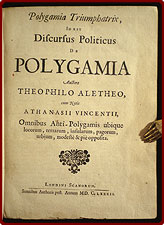
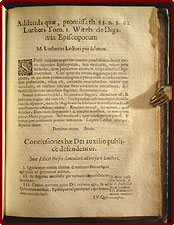
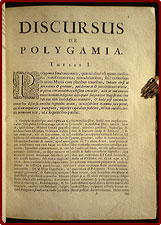 Click the images for enlargements.
 According to the online cataloguing of this book at Brigham Young University, “Early editions [were] burnt by [the] hangman in Denmark (1676); in Sweden (1679) . . . the possession of a copy meant a 1000 ducat fine. This edition was added to the Index of forbidden books in 1687.” It is often held today in medical libraries.
• Graesse, I, 68. 17th-century speckled calf, spine gilt extra with gilt-stamped leather title-label; leather chipped at top of spine with front joint open (though holding), abraded/pitted, and rubbed through to paste boards at corners. Front pastedown with Parisian bookseller's ticket; front free endpaper with pencilled annotation; back pastedown with rubber-stamped date in 1908. Slip of old printed cataloguing laid in. (23549)
For more 17TH-CENTURY BOOKS, click here. For more RELIGION, click here. For more of WOMEN's interest, click here.

The Devil AsmodeusLytton, Edward Bulwer Lytton, Baron. Asmodeus at large. Philadelphia: Carey, Lea & Blanchard, 1833. 12mo. [4 (adv.)], iv, [13]-227, [25 (adv.)] pp. 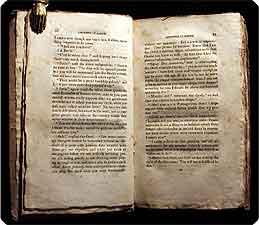 Single-click
the image for an enlargement.
Single-click
the image for an enlargement.
• Plain quarter cloth and paper-covered sides, worn and water-stained, corners bumped. Front free endpaper with pencilled inscription. Page edges untrimmed; pages with foxing ranging from mild to severe. This copy with the full complement of advertising pages. (5813)
For more ENGLISH LITERATURE, click here.

 TO Part XXIII TO Part XXIII |