 MANUSCRIPTS

 Our numerous SPANISH-LANGUAGE MANUSCRIPTS now have
their own separate, dedicated catalogue: Click here.
MANUSCRIPTS
Our numerous SPANISH-LANGUAGE MANUSCRIPTS now have He Survived “La Noche Triste” & Much, Much MoreTHE
CONQUEROR'S REWARD
He Survived “La Noche Triste” & Much, Much MoreTHE
CONQUEROR'S REWARD
 (A
CONQUISTADOR'S GRANT OF ARMS). Felipe II, King of Spain. Illuminated Document Signed (on his behalf by his sister/regent, “La Princesa”). In Spanish, on vellum. Valladolid, 17 March 1559. Folio (58 x 54.5 cm; 23" x 21.5"; h x w), 1 leaf.
(A
CONQUISTADOR'S GRANT OF ARMS). Felipe II, King of Spain. Illuminated Document Signed (on his behalf by his sister/regent, “La Princesa”). In Spanish, on vellum. Valladolid, 17 March 1559. Folio (58 x 54.5 cm; 23" x 21.5"; h x w), 1 leaf.  |
|
|
|
|
|
|
|
|
|
|
|
|
|
|
|
 |
| ||||||||||||||
 |
 |
 |
 |
 |
 |
 |
|
||||||||
 |
| ||||||||||||||
 |
| ||||||||||||||
 |
 |
| |||||||||||||
 |
 |
| |||||||||||||
 |
 |
| |||||||||||||
 |
 |
| |||||||||||||
 |
| ||||||||||||||
 |
 |
 |
 |
| |||||||||||
 |
 |
 |
 |
| |||||||||||
 |
| ||||||||||||||
 |
 |
| |||||||||||||
 |
 |
| |||||||||||||
 |
| ||||||||||||||
 |
 |
| |||||||||||||
 |
 |
| |||||||||||||
 |
| ||||||||||||||
 |
| ||||||||||||||
 |
| ||||||||||||||
 Move your mouse over the document above, and click,
to select and view details.
 Villanueva was among the small but grand “army” that marched into Tenochtitlán in the Spring of 1520 and in July of the same year were to flee the western world's largest city fighting for their lives, on the “Noche Triste.” He survived the hell and slaughter of the causeways and later returned with the greatly augmented force that destroyed the Aztec capital and its empire. Still later he was with Cortés in the exploration and conquest of Pánuco and following that with Nuño de Guzmán in the exploration and conquest of Zacatecas and Jalisco. He and his brother Fernando (also a member of the Saucedo contingent) jointly received an encomienda (Quechula) and settled in Puebla de los Angeles where Pedro served as a regidor on the town council in the 1540s and 1550s.

 The text of the grant of arms is elegantly
indited in a standard court semi-round gothic in sepia ink and is enclosed
on the left, right, and top sides by an illuminated and historiated sash-like
border. In the upper left and right corners are miniatures of Justice
and Knowledge in sylvan settings. Running between those two along the
top of the document is a decorative panel incorporating flowers, fruits, mythic
animals, and cherubs. Below this, the king's name is accomplished in
large letters of gold on a field of red accented with gold, and the “D”
of his honorific “Don” is given special treatment. This
is elaborated in an ornate, almost baroque style that comes close to obfuscating
the fact of its being a majuscule “d”: Wrought in gold,
the letter at first appears to be merely a “frame” for the royal
coat of arms that fills its center. The king's arms are accomplished
in gold, white, black, red, and blue; the whole being laid on a blue field
with white accents.
The text of the grant of arms is elegantly
indited in a standard court semi-round gothic in sepia ink and is enclosed
on the left, right, and top sides by an illuminated and historiated sash-like
border. In the upper left and right corners are miniatures of Justice
and Knowledge in sylvan settings. Running between those two along the
top of the document is a decorative panel incorporating flowers, fruits, mythic
animals, and cherubs. Below this, the king's name is accomplished in
large letters of gold on a field of red accented with gold, and the “D”
of his honorific “Don” is given special treatment. This
is elaborated in an ornate, almost baroque style that comes close to obfuscating
the fact of its being a majuscule “d”: Wrought in gold,
the letter at first appears to be merely a “frame” for the royal
coat of arms that fills its center. The king's arms are accomplished
in gold, white, black, red, and blue; the whole being laid on a blue field
with white accents.

The panels running down the left and right
sides of the document are accomplished in red, gold, green, pink, white, red,
blue, and brown, many in several shades. The decoration includes birds
of several varieties including a fine owl, animals including a watchful rabbit,
strawberries and other fruits, and flowers, ribbons, grotesques, and butterflies.

The document is signed in the king's name by Juana (Joanna Habsburg) de Austria, “princesa de Portugal.” Married to Prince Juan of Portugal, young Juana (b. 1537) was the regent of the Spanish crown from 1554 until her brother Philip's return to Spain in September of 1559. She had just lost her husband to death and borne his posthumous son, both in January, 1554, when she left Portugal and her child in the Spring of that year to assume the regency throne in Valladolid.

 In
format and content this document differs dramatically from the cartas executorias
de hidalguía that most collectors are familiar with. Here we have a
In
format and content this document differs dramatically from the cartas executorias
de hidalguía that most collectors are familiar with. Here we have a  single large sheet
of vellum handsomely engrossed, artfully illuminated, and exquisitely decorated
with a composite border containing miniatures. This is not a bound volume
of copies of documents created for storage in the family archive.
single large sheet
of vellum handsomely engrossed, artfully illuminated, and exquisitely decorated
with a composite border containing miniatures. This is not a bound volume
of copies of documents created for storage in the family archive.  This
was created for display in a prominent place of honor; and it is a magnificent
display item. This is not a grant of nobility nor
a confirmation of it based on something that some vague ancestor did; rather
it is a grant of a coat of arms to a man who himself performed significant
military and other service for the Crown and whom the Crown wishes to honor
both publicly and privately. Only a few hundred of Cortés's men
survived the Noche Triste, the reentry into and destruction of Mexico
City, and the subsequent conquests in Panuco and elsewhere. The number
of grants such as this to actual members of Cortés's original “army”
were few.
This
was created for display in a prominent place of honor; and it is a magnificent
display item. This is not a grant of nobility nor
a confirmation of it based on something that some vague ancestor did; rather
it is a grant of a coat of arms to a man who himself performed significant
military and other service for the Crown and whom the Crown wishes to honor
both publicly and privately. Only a few hundred of Cortés's men
survived the Noche Triste, the reentry into and destruction of Mexico
City, and the subsequent conquests in Panuco and elsewhere. The number
of grants such as this to actual members of Cortés's original “army”
were few.
 And surviving grants to those actual participants in the Conquest are extremely
rare, even more so in commerce.
And surviving grants to those actual participants in the Conquest are extremely
rare, even more so in commerce.  This
is the only royal grant of a coat of arms to an actual member of Cortés's
“army” that we have seen that has ever appeared in the marketplace.
Via published auction records and our extensive archive of dealer catalogues,
we trace no instance before this one of the offering for sale of a grant of
arms to a Conqueror of Mexico. Yes, there are examples in various libraries
and museums in Mexico and Spain, and probably in the U.S., but such examples
seem to have entered their institutional resting places via donation from
descendants of Conquerors, not via purchase.
This
is the only royal grant of a coat of arms to an actual member of Cortés's
“army” that we have seen that has ever appeared in the marketplace.
Via published auction records and our extensive archive of dealer catalogues,
we trace no instance before this one of the offering for sale of a grant of
arms to a Conqueror of Mexico. Yes, there are examples in various libraries
and museums in Mexico and Spain, and probably in the U.S., but such examples
seem to have entered their institutional resting places via donation from
descendants of Conquerors, not via purchase.

Provenance: It
is awesome to realize that this is no mere retained secretarial copy of Felipe's
grant of arms to Pedro de Villanueva. This gorgeous document not only
records the king's rewards to one of Cortés's men, but was that Conqueror's
personal property. It is the copy of the decree sent to him expressly,
by the Crown!

• On Villanueva, see: Icaza, Diccionario autobiográfico
de conquistadores y pobladores de la Nueva España, I, 88–89;
Thomas, Who's Who of the Conquistadors, 146; Himmerich y Valencia,
The Encomenderos of New Spain, 1521–1555, 262; Díaz
del Castillo, Verdadera historia de la conquista de la Nueva España,
chap. LIII. On Juana de Austria, see: the work of Dr. Kelli Ringhofer.
Overall in very good condition. Some fold tears, some minor rubbing
of small areas of images, stains as visible in our illustrations. The
wax seal and its silk cords no longer present.  Text
clear, not faded, and colors strong.
Text
clear, not faded, and colors strong.
 To review the pictures of this document more systematically than
 This entry is repeated in the


 Extended MANUSCRIPT in an
 UNCOMMON PHILIPPINE LANGUAGE
  Antonio Lobato de Santo Tomás. Manuscript in Ibanag on paper: “Quinque sermones in quinque precipuis festivitatibus B. Maria Virginis. Quibus accedunt sermo in feria quarta cinerumz et sermo in dominica 2o post octavam trinitatis. Per R. P. fray Antoniium Lobatao de Sto. Thomas. Tuguegarao, The Philippines: 1776–80. Small 4to. 196 pp.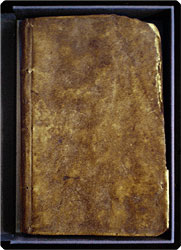
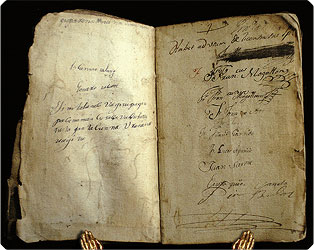
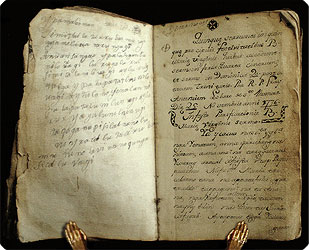
 Click the interior images for enlargements.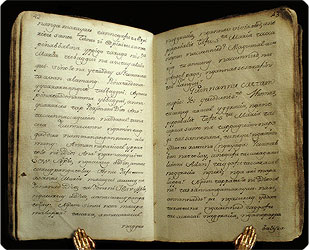
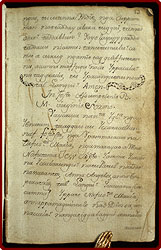
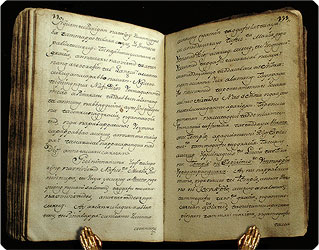 a large body of work set down in the Ibanag language, from the 18th century and as written/spoken by one of the seminal scholars of the language, should be obvious for anyone researching the language as understood by missionaries, as used by missionaries, as influenced by Spanish, and as held out by Spaniards of authority as the model of Ibanag speech to be emulated. Beyond this, of course, is the interest of the sermons themselves, letting us see what the Ibanaq speakers were hearing from their missionaries — or, at least, this missionary — in this place, in this period.
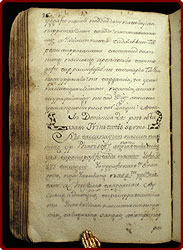
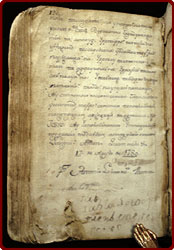
Provenance: A signature “Fr. Antonio Lobato de Sto. Thomas” appears at the bottom of the last page and is almost certainly that of the the friar himself, which would mean that this is his autograph manuscript of the sermons.
• Contemporary very stiff vellum. Binding gnawed by a rodent with loss. Written on a good quality European paper, with some soiling and an occasional stain. No faults are serious and overall this is a remarkably good survival for an 18th-century Philippines manuscript. Now housed in a blue cloth clamshell box. (23668)
 “The Victoria Album”(Augusta's Album).
Luckenback, Augusta, collector. Manuscript on paper, in English. Philadelphia, Easton, Bethlehem, and elsewhere. ca. 1853. 8vo (23.5 cm, 9.25"). [84 ff. (12 inscribed)]; 8 plts.
“The Victoria Album”(Augusta's Album).
Luckenback, Augusta, collector. Manuscript on paper, in English. Philadelphia, Easton, Bethlehem, and elsewhere. ca. 1853. 8vo (23.5 cm, 9.25"). [84 ff. (12 inscribed)]; 8 plts.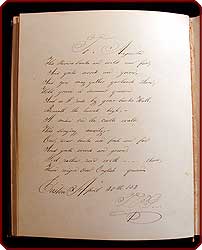
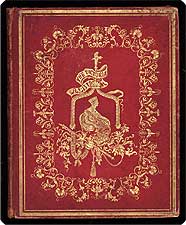
 The front cover vignette has been reproduced, in gilt, opposite the frontispiece portrait.
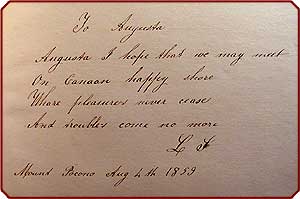 Provenance: The inscription on the front fly-leaf reads “Miss Augusta E. Luckenback [/] presented to her by her dear sister Em [/] Feb.y 11th/53.”
Binding: Publisher’s red morocco, spine gilt extra, front and back covers with gilt-stamped vignettes of Queen Victoria, front vignette surrounded by gilt-stamped floral border. All edges gilt.
• Binding as above, edges and spine rubbed, still bright and attractive. Mild foxing to some leaves and plates.
For more POST-1820 AMERICANA, click here. For
more of WOMEN's interest, click
here. For
more Books with SPECIAL


“Northern
Liberties” — Philadelphia
Broadside. Partially printed, completed in manuscript, beginning: To --------- Esq. Attorney of the Court of Common Pleas, at Philadelphia in the County of Philadelphia in the state of Pennsylvania to any other Attorney of the said Court, or of any other Court elsewhere. Philadelphia: before 1790. Folio. 1 page (13.125" x 8").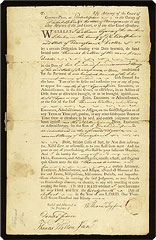
Tyson and Walton signed the document on 24 August 1791.
An excellent display piece.
• Old folds with a few short tears. Residue of mounting tape at two points on the left margin. (14729)
BROUGHAM on Literature & Science — with MS. Letter Brougham, Henry Peter, Baron Brougham & Vaux. Addresses on popular literature, and on the monument to Sir Isaac Newton: Delivered at Liverpool and Grantham. London: Edward Law, 1858. 8vo. 63, [1] pp.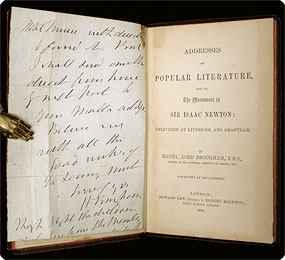
 Click the images for enlargements.
 Provenance: Ownership signature on front free endpaper, “Mr. Justice McDougall, Jamaica.”
Autograph manuscript addition: Tipped onto the title-page is a manuscript letter signed by Brougham, dated 1839. In this informal but warmly written letter apparently addressed to an uncle, he declines an invitation and briefly mentions “the children,” whom he thought were left safe from the measles at Paris; he had one living daughter at the time of this letter's composition, and may be referring to members of his extended family.
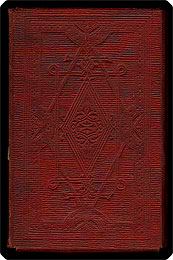
• NSTC 2B51067. Publisher's limp red cloth in imitation of morocco, yapp edges, covers blind-stamped, spine with gilt-stamped title; extremities rubbed, spine slightly darkened with small paper label, sides with small areas of minor discoloration. All edges stained red. Front free endpaper with early inked inscription and small private pressure-stamp. Pages age-toned; one early inked correction. (26986)

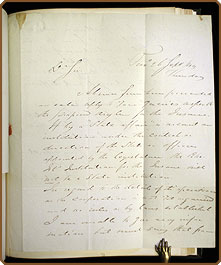
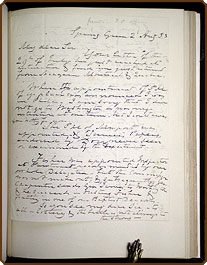
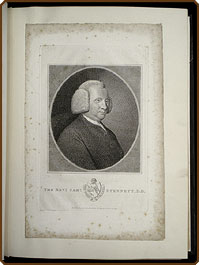
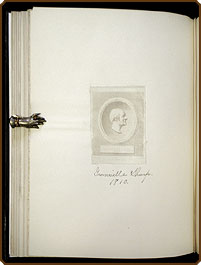
A Volume EXTRA ILLUSTRATED & Then Some! Brown University. Celebration of the one hundreth anniversary of the founding of Brown University, September 6th, 1864. Providence: Sidney S. Rider & Bro., 1865. 4to (26.5 cm; 10.25"). [4] ff., 178 pp., [1] f. 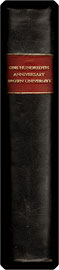
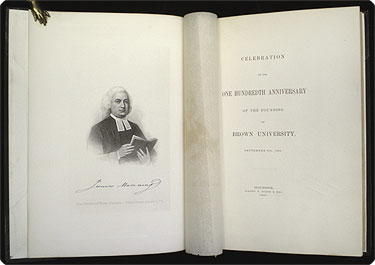
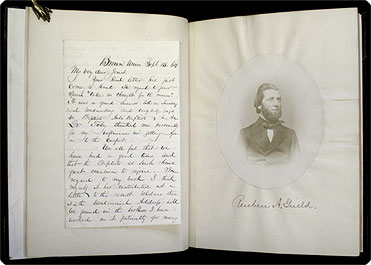 Click the images for enlargements.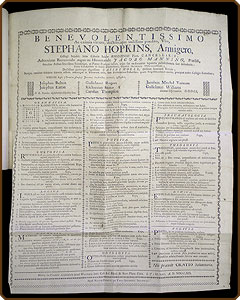
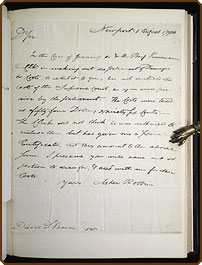
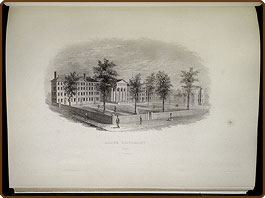
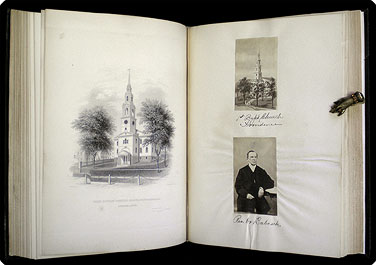
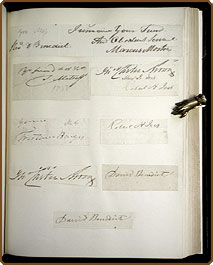
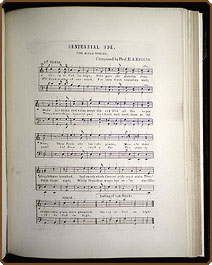
 A full list of contents is available by clicking here.
What’s Going on Here?Burnside, Thomas. Document Signed. Clearfield, PA, 1811. Double folio (39.5
cm, 15.5"). [1] f.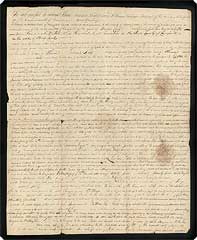 Click the image for an enlargement.
The Irish-born Burnside, then treasurer of Clearfield, Pennsylvania, was later a justice of the Pennsylvania state supreme court.
A notary’s seal is affixed to the document, which was signed by both Burnside and Patton.
• Creased and slightly age-toned, with the folios separated and some offsetting from seal; a few small holes, touching text without notable loss.

 TO Part
II . . . TO Part
II . . . |