
 CENTRAL AMERICA
CENTRAL AMERICA
CENTRAL AMERICA
 Volcanic Illustrations — Baily's Central American Survey
  (A
Thoughtful Overview). Baily, John. Central America; describing
each of the states of Guatemala, Honduras, Salvador, Nicaragua, and Costa Rica;
their natural features, products, population, and remarkable capacity for colonization.
London: Trelawney Saunders, 1850. 8vo (19.5 cm, 7.6"). Frontis., xii, 164 pp.;
2 plts.
(A
Thoughtful Overview). Baily, John. Central America; describing
each of the states of Guatemala, Honduras, Salvador, Nicaragua, and Costa Rica;
their natural features, products, population, and remarkable capacity for colonization.
London: Trelawney Saunders, 1850. 8vo (19.5 cm, 7.6"). Frontis., xii, 164 pp.;
2 plts.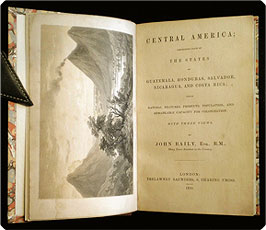
 Click the interior image for an enlargement.
 The volume is illustrated with three engraved views, all three incorporating volcanos. As usual, this copy does not include the oversized map, which was printed and published separately.
• Palau 21943; Sabin 2771; Nicaraguan National Bibliography 1476. 20th-century quarter red morocco and marbled paper–covered sides, spine with gilt-stamped title; minor wear to corners and spine extremities. Plates with light waterstaining to lower portions; frontispiece, title-page, and plates backed with linen. (25454)

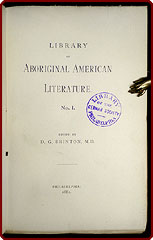
“Genuine Specimens of Native Literature” Maya & English Presentations — With Notes Brinton, Daniel Garrison, ed. The Maya chronicles. Philadelphia: D.G. Brinton, 1882. 8vo (24 cm, 9.4"). [2], 279, [1] pp.
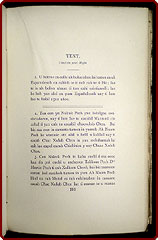
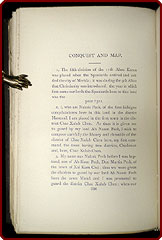 Click the images for enlargements.
  First printing in the U.S. of any pre-Columbian text in the original Maya. This is no. I in the “Brinton's Library of Aboriginal American Literature” series, opening with a description of the Maya and including selections from the books of Chilam Balam of Mani, Tizimin, and Chumayel, along with the chronicle of Chac Xulub Chen. Each Mayan text is accompanied by an English translation and the editor's notes.
• Not in Pilling, Proof-sheets; not in Newberry Library, Indian Linguistics in the Edward E. Ayer Collection. Publisher's brown textured cloth framed in blind, spine with gilt-stamped title; binding slightly cocked, corners and spine extremities a little rubbed, spine a bit sunned. Ex–social club library: call number on front fly-leaf, half-title and title-page rubber-stamped. No other markings. (26511)
Legal Age for Marrying Charles IV, King of Spain. Begins: Don Carlos ... Con fecha de diez de Abril de este año he tenido a bien expedir mi Real Decreto del tenor siguiente.” [Madrid: No publisher/printer, 1803]. Folio. [4] pp. (last blank).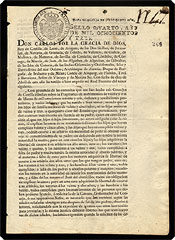
Signed by the crown with a wooden stamp, “Yo el Rey.”
This copy sent to Santiago, Chile, and docketed there.
• Removed from a nonce volume. Clean and untattered. (25817)

 “The most important documentary collection for colonial Spanish America” Coleccion de documentos ineditos relativos al descubrimiento, conquista y organizacion de las antiguas posesiones españolas en América y Oceanía. Madrid: Various publishers, 1864–84 & 1966. 8vo. 42 volumes.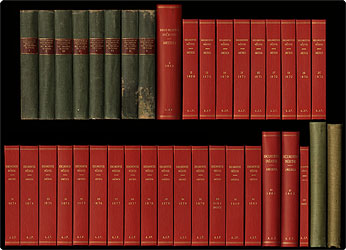
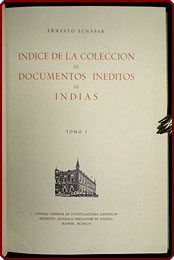
A mixed set in mixed bindings: all volumes except 11 are first editions, the exception being a 1966 reprint. Many original wrappers bound in. Volumes 1–10 in early quarter cloth, 11–42 in modern full cloth.
• Griffin, Latin America: A guide to the historical literature, 2063; Palau 56442. Bindings as above: Vols. 1–10 with abrasion/discoloration to spines, otherwise minor wear; moderate foxing, and some early annotations. Vols. 11–42, cloth bright; mostly clean internally, last 2 pages of last volume supplied in facsimile. Vol. 38 lacking fascicles 3, 4, 5, and 6. (25828)
 A Costa Rican ConstitutionLong Active Costa Rica. Constitucion. 1871. Decretos y constitucion politica de la República de Costa-Rica, emitida en 1871 y adoptada el 26 de abril de 1882. San José: [Impr. Nacional], [1882]. 12mo. 39, [1 (blank)] pp., [1 (ndex)] f.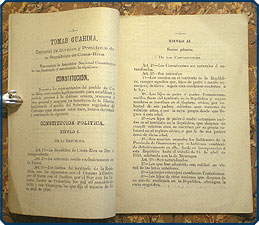
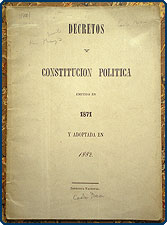 Click either image
Rare. The only copy we located in Latin America via METABASE is in the Biblioteca Monseñor Sanabria Martínez (Biblioteca Asamblea Legislativa de la República de Costa Rica). In the U.S. we locate only the copies at Bancroft and Harvard Law libraries.
Wrapper title is “Decretos y constitución política de la República de Costa-Rica, emitida en 1871 y adoptada en 1882.”
• Not in Palau. Original printed wrappers, wrappers dusty and with old pencil writing. (21258)
 Who's In Charge of What & How Much They Are Paid Díez de la Calle, Juan. Memorial informatorio al rey nuestro señor, en su real y supremo Conseio de las Indias, Camara, y Junta de Guerra. [Madrid: No publisher/printer], 1645. Small 4to. [11 (of 12)], 31 (of 32) ff. (lacks pi4 and a1).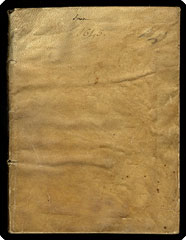
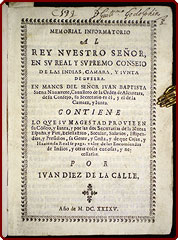
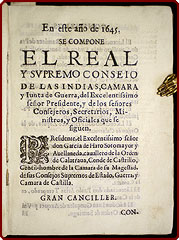
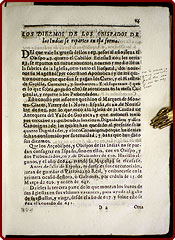 Click the interior images for enlargements.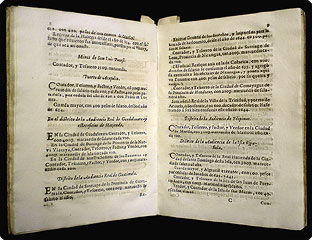
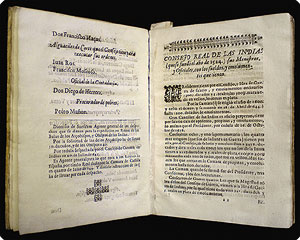
To aid in getting a refreshed grip on the administration of the New World, Philip IV of Spain asked Juan Díez de la Calle, a member of the Consejo de Indias, to produce a concise administrative handbook for use solely by the Council of the Indies, the King, and his close advisors. Here one finds all of the administrative divisions with dates of creation; office holders and their salaries and when the office was created; differences existing between administrative districts; and an interesting section on the various “annual” convoys (“armadas”) and the general in charge of each.
Provenance: Ownership signature at top of title-page of “Guill[er]mo Godolphin,” i.e., Sir William Godolphin.
• Alden & Landis, European Americana, 645/45; Palau 73741; Sabin 20133. Early limp vellum. Lacking two leaves: “Al Lector” leaf and the sectional title-leaf. A very good copy. (25808)

 A Very Famous Conqueror
of MexicoSIGNED
Díaz del Castillo, Bernal. Document Signed ("Bernal Díaz"). Santiago de Guatemala, 24 July 1556. Folio, 2 1/2 pp.
A Very Famous Conqueror
of MexicoSIGNED
Díaz del Castillo, Bernal. Document Signed ("Bernal Díaz"). Santiago de Guatemala, 24 July 1556. Folio, 2 1/2 pp.
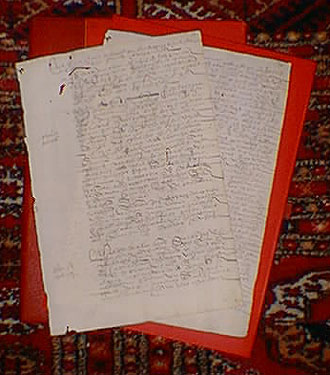
The document we here offer is a cabildo (i.e., town council) act. Bernal Díaz served as a member of the cabildo of Santiago de Guatemala for a number of years, an honor bestowed on him as a conqueror and early settler of the region. In this document the cabildo acknowledges receipt of a royal decree, reads it verbatim into its minutes, and formally agrees to comply. The king writes that he is informed that the post of notary public and "del número" in Santiago is vacant because Juan Núñez de Soria, who held the royal appointment to that position, "is gone to Our kingdoms of Peru." On the advice of the Royal Audiencia (i.e., High Court) the king appoints Juan de Rojas to be notary public and "del número."
• The document is housed in a red half morocco slipcase with an internal corset. Six small wormholes in each leaf affect one or two letters each, but not the signature of Bernal Díaz.
 MEXICO is
one of our great specialties.
MEXICO is
one of our great specialties.


Early El Salvador Imprint Nullifying an Appointment El Salvador. Asamblea legislativa. Broadside, begins: “Ministerio general del Gobierno del Estado del Salvador ... La Asamblea legislativa ... decreta. Se declara insubsistente el nombramiento de magistratado par que fue electo el Lic. Atanacio Urritia. San Salvador: No publisher/printer, 1833. Small 8vo. [1] p.
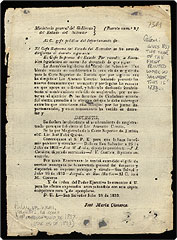
Printing seems to have arrived in El Salvador in 1825, placing this in the first decade of that art there.
Apparently rare: We trace no copy via NUC Pre-1956, WorldCat, CCILA, or METABASE.
• Removed from a nonce volume. A few small holds from insect damage, a few of the few repaired with archival tissue. Old bibliographical notations in pencil in margins. Light waterstaining in upper outer corner. (25791)

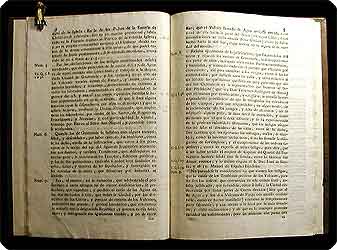
The Earthquake That Changed GuatemalaGonzález Bustillo, Juan. Extracto, ô Relacion methodica, y puntual de los autos de reconocimiento, practicado en virtud de commission del señor presidente de la Real Audiencia de este reino de Guatemala. Pueblo de Mixco [Guatemala]: Impreso en la oficina de A. Sanchez Cubillas, 1774. Folio (29.5 cm; 11.675"). [2], 86 pp. (without final leaf with one erratum) 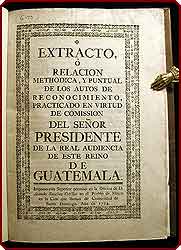
 Single-click any image where the hand appears on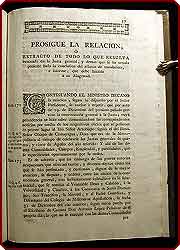
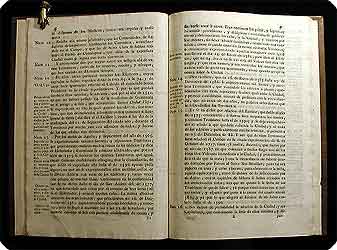
This document is one of the very few printed in the temporary capital of Mixco, a press having been salvaged from the ruins in the former capital. Thus, Mixco was the second city/town to have a press in Central America, and then, for only a short time—appoximately two years.
In addition to being important for its contents and in the realm of printing history, the González Bustillo report is uncommon: We trace only half a dozen copies in U.S. libraries.
• Medina, Guatemala, 384; Palau 105113; Sabin 27811. Modern full calf, very plain style. Without the final leaf with one erratum on it.
The
King &
the High Court
— A ManuscriptARCHIVE
1600-28
(Guatemala, Audiencia of). An unpublished collection of 56 royal decrees signed by Felipe III (some with a stamp) to the Royal Audiencia of Guatemala. Valladolid, Madrid, San Lorenzo, etc., 18 May 1600 - 15 June 1628. Folio. 100 ff. (some blank).
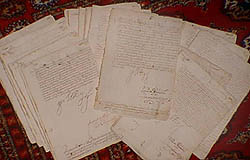
The first audiencia was established in Santo Domingo in 1508 with others springing up as the Spaniards discovered and settled North and South America. The Audiencia of Guatemala came into existence on 20 November 1542 through the New Laws and had a troubled and peripatetic beginning: The documents that compose this collection do not deal with things quite as dramatic as either the judicial insanity or the big-time smuggling of those earliest years, but they do, nonetheless, document various unstudied aspects of the presidencies of Dr. Alonso Criado de Castilla (1598-1611), Don Antonio Pérez Ayala Castilla y Rojas (1611-26), and Dr. Diego de Acuña (1626-33). The royal cedulas fall into three broad categories: requests for information, demands for action, and orders ending existing practices.
An example of the Crown's requests for information is a decree of 4 December 1601. The king would sometimes receive complaints that were best handled extrajudicially, often involving political activities of clerics, over whom the civil and criminal courts did not have jurisdiction and with whom, the authorities felt, the ecclesiastical courts would deal ineffectively. In one case, the governor of Honduras had complainedæ to the king that the dean of the church in Comayagua was disrupting attempts to recruit men for the defense of the port of Trujillo: The king, investigating, expects that the audiencia's information will be unbiased because of its physical and emotional distance from Honduras and its local politics and squabbling.
Another, much more ominous, request was handed down on 28 June 1621. The king has "discovered" that "foreigners" are living in the New World. Since they are there illegally, he wants a list of them and correlated inventories of their possessions and land holdings. This was the beginning of the oppression of Portuguese settlers who had moved to the New World during the "Babylonian captivity" of Portugal by Spain.
The royal demands for action were usually grants of royal patronage or largesse. On 10 July 1600 the king orders the audiencia to administer the terms of his decree granting a one-time-only gift of money to the cathedral in Santiago, and on 4 July 1601 he orders the court to give the mission church in Trinidad de Sonsonate a chalice and a bell.
The Crown was fully aware that the physical distance between it and its New World provinces would result in the development of local customs and practices, and to a large extent it tolerated these deviations from "the norm." For example, on 31 May 1600, Felipe III officially accepts the local custom of the audiencia's appointing the majordomo of the Royal Hospital. But at other times the Crown felt put upon and ordered the end of "local practices." On 12 December 1619 the king orders the audiencia to stop subdividing encomiendas and parcelling the subsections out as parts of government pensions.
 The
documents in this remarkable collection are unpublished.
They are an important unused source for the history of the high court
during the first quarter of the 17th century. Through them we find out what
the "local customs" of patronage and of usurpation of royal prerogative were.
Through the reiteration of previously issued decrees we discover which decrees
the court was ignoring, using the famous doctrine of "obedezco pero no cumplo."
Through these decrees we glimpse royal patronage and royal displeasure.
The
documents in this remarkable collection are unpublished.
They are an important unused source for the history of the high court
during the first quarter of the 17th century. Through them we find out what
the "local customs" of patronage and of usurpation of royal prerogative were.
Through the reiteration of previously issued decrees we discover which decrees
the court was ignoring, using the famous doctrine of "obedezco pero no cumplo."
Through these decrees we glimpse royal patronage and royal displeasure.
A
detailed calendar of the documents is available upon request.
• Clarence H. Haring, The Spanish Empire in America, pp. 126, 75-76, and 113-14; Murdo J. MacLeod, Spanish Central America, pp. 390-91, on the audiencia's earliest years. The decrees have been very carefully removed from a bound volume and, now stored in Mylar sleeves, are housed in a blue cloth slipcase with blue morocco spine labels. This major source for the study of the Royal Audiencia of Guatemala is in very good condition.
 For a collection of COLLECTIONS, click here.
Noble
Orders — American
Ones Included Here!Maigne, W. Dictionnaire encyclopédique des ordres de chevalerie civils et militaires créés chez les différents peuples depuis les temps les plus reculés jusqu'a nos jours. Paris: Adolphe Delahays, 1861. 12mo (17.2 cm, 6.8"). xvi, 240 pp., fold. table/plt.
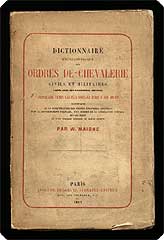
• Vicaire, Manuel de l'amateur de livres du XIXème, I, 772. Uncut, mostly unopened copy. Publisher's wrappers, printed in black and red; front one off, with expectable chipping and with soiling. Some pages lightly spotted; mostly, clean. Now housed in a simple acid-free phase-box. (14356)
Eye-Witness to Many Events Described Marure, Alejandro. Bosquejo histórico de las revoluciones de Centro-America. Desde 1811 hasta 1834. Guatemala: Tip. de “El Progreso”, 1877–1878. 8vo. 2 vols. in 1. I: 191, [1 (blank), LII (documents) pp., [3] ff. II: 143, [1 (blandk)], LIX, [1 (blank)] pp., [3] ff.
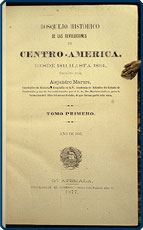
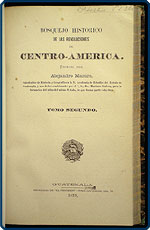 Click the interior images for enlargements.
 • Late 19th-century quarter red morocco, plain style, with marbled–paper covered boards. Leather lightly scuffed in places. All edges marbled to match endpapers. Occasional pencilling. (24596)

A Good, Old-Fashioned, INDEX to Complicated Law Stuff Perez y Lopez, Antonio Xavier. Teatro de la legislacion universal de España é Indias. Madrid: Various publishers, 1791–98. Small 4to. 28 volumes.

 Click the images for enlargements.
• Palau 221275; Sabin 60899. Modern quarter brown calf over marbled paper boards, with red and green spine labels. A clean, very nice set, with only a bit of minor dampstaining and the odd spot or paper flaw in all the many volumes. All edges red. (25829)
The KEYSTONE
of Hispanic-American
Colonial LawHANDSOME
Edition
Spain.
Laws, statutes, etc. Recopilacion de leyes de los reinos
de las Indias. Madrid: Boix, 1841. Small folio. 4 vols. in 2. I: [6]
ff., 335, [1 (blank)] pp. II: [1] f., 334 (i.e., 332) pp., [1 (index) f. III:
[1] f., 319, [1 (blank)] pp., [1] f. IV:[1] f., 147, [1 (blank)] pp., [1] f.;
105, [1], 31, [1] pp. (all indices). 

 Click
the interior images for enlargements.
Click
the interior images for enlargements.


 handsomely
printed in double-column format. This copy is attractively
bound, as well.
handsomely
printed in double-column format. This copy is attractively
bound, as well.
• Palau 137466; Sabin 68390. Victorian acid-stained sheep with gilt spines extra. Marbled edges. Tape adhered to one title-page at inner margin. Ownershjp signatures on title-page. A nice set.
Unique
Bifolium: An Unrecorded
Example of Early PrintingUrbis,
& Orbis. Broadside.
Begins: "Vrbis, & Orbis. Sanctissimus D.N. Clemens Papa X de consilio Ementissimorum
Cardinalium Sac. Rituum Congregationi Præpositorum ad preces sibi porrectas...."
Guatemala: José Pineda Ibarra, 1673. 4to. Two copies printed on an uncut
half sheet (one on recto, one on verso); size of sheet 31 x 21 cm.
Unrecorded
Example of Early PrintingUrbis,
& Orbis. Broadside.
Begins: "Vrbis, & Orbis. Sanctissimus D.N. Clemens Papa X de consilio Ementissimorum
Cardinalium Sac. Rituum Congregationi Præpositorum ad preces sibi porrectas...."
Guatemala: José Pineda Ibarra, 1673. 4to. Two copies printed on an uncut
half sheet (one on recto, one on verso); size of sheet 31 x 21 cm. 
Guatemala was the fourth Latin American city to have a printing press (after Mexico, Lima, and Puebla de los Angeles); the press was brought at the instigation of the bishop of Guatemala, Payo Enríquez de Ribera, who wished to have a work of his own published. In reply to the bishop's appeal for a printer, José Pineda Ibarra arrived at Antigua in 1660. He had worked as an assistant to several printers in Mexico, but according to Medina did not have his own press; when Payo de Ribera's representative found him, he had moved to Puebla, but was apparently not doing well there. (Medina does not list him as a printer in Puebla—presumably he was again working for others.) The bishop apparently paid for the press that was taken to Guatemala, and Pineda Ibarra later purchased it from him. Torre Revello (quoted in Furlong) remarks that despite the dearth of materials, Pineda Ibarra managed to print exceedingly well: "Ningún tipógrafo de los que le sucedieron, durante el periodo colonial, logró superar la pulchritud y elegancia de sus trabajos." This example shows not only several sizes of type, but a woodcut of a papal tiara, at the top of the edict, flanked by typographical ornaments; a line of typographical ornament also appears on either side of the date of the edict, near the bottom of the page.
The various religious orders in Guatemala had promised to make it worth the while of a printer to come, by giving him commissions. Judging from the list of over 30 works Pineda Ibarra printed before 1673—eulogies, sermons, constitutions, regulations, descriptions of religious festivities—the orders fulfilled their promise; his major productions, however, were Bishop de Ribera's Explicatio apologetica nonnullarum propositionum . . . , 1663, and Diego Saenz Ovecuri's La Thomasiada, 1667. Also a bookseller and binder, Pineda Ibarra died in 1679. He was succeeded in 1681 by his son, Antonio de Pineda Ibarra, under whom the press operated until 1721.
The text in hand, a papal edict of 23 July 1672, changes the office for St. Peter Nolasco used by Mercedarians from semiduplex to duplex, at the request of the Queen of France. The Orden Real de Nuestra Señora de la Merced, Redemción de Cautivos, was already established in Guatemala (cf. Medina, Guatemala, 38), and probably paid Pineda Ibarra to print this work.
• Not in Medina, Guatemala; on the printer, see: Medina's introduction, pp. xviii–xx. Not in Valenzuela, Imprenta en Guatemala; O'Ryan, Bib. Guatemalteca; NUC; BMC. See, however, Oswald, p. 539; Furlong, Orígenes, p. 91; and Woodbridge and Thompson, Printing in Colonial Spanish America, pp. 81–84. This is stored in a mylar folder, for its protection; we did not remove it to photograph it. But it CAN be removed — it is not (we shudder to type it!) laminated as it may appear to be, on your monitor.
FIRST Accounts of a Conquest & an Attempted ConquestThe Itza Maya & the Lacandón!Villagutierre Sotomayor, Juan de. Historia de la conquista de la provincia de el Itza, reduccion, y progressos de la de el Lacandon, y otras naciones de indios barbaros, de la mediacion de el reyno de Guatimala, a las provincias de Yucatan, en la America septentrional. Madrid: Lucas Antonio de Bedmar y Narvaez, 1701. Folio (28.5 cm; 11.5"). Engr. “frontispiece,” [32] ff., 660 pp., [17] ff.


 Click any image above for an enlargement.
  This is the first published book dedicated solely to the history of the Yucatán and the Maya, here offered in its first edition, first issue (with the incorrect catchword “gla” at the foot of the recto of the 22nd preliminary leaf).
 Bedmar y Narvaez printed the title-page in black and red and the text is in double-column format. This copy bears both the engraved “frontispiece” and the black and red title-page, but, as usual, not the very rare colophon.
Although touted as “Primera parte” on the title-page, there were no further parts; this Historia is complete, “all published.”
• Palau 366681; Medina, Biblioteca hispano-americana, 2051; Sabin 99643; Leclerc 1546; Salvá 3422; Heredia 3407; Alden & Landis, European Americana, 701/262. On Villagutierre, see: Archivo biográfico de España, Portugal, e Iberoamérica, fiche 1019, frames 213–16. 19th-century Spanish sheep (“pasta española”), covers abraded and with pinhole-type worming to spine; loss of lower inch of spine leather to insects. Browning to text due to impurities in water during paper manufacture. Small insect damage to margins of first four leaves, not touching any text; similar small damage in inner margins of last four leaves. Over all, a decent copy of a scarce work.

Individual Yankee Imperialism
Walker, William. The war in Nicaragua. Mobile & New York: S.H. Goetzel & Co., 1860. Small 8vo. Frontis. port., xii, 431 pp., fold. map. Click the image for an enlargement. Walker's own account of his filibustering expedition to take over Nicaragua, after having failed to wrest Baja and Sonora from Mexico. Walker was a man who wanted his own country and did not let initial failure deter him. His attempt to take Nicaragua was successful at first but a combination of local resistance, the Costa Rican army, and mercenaries in the employ of Cornelius Vanderbilt (who viewed Walker as a threat to his own interests in Central America) brought about Walker's downfall.
After a brief respite back in the U.S., where he was welcomed as a hero, Walker, the quintessential filibusterer, returned to Central America wanting to capture Honduras. He died there trying.
The map (14" x 16") is in four colors and is titled “Colton's Nicaragua, Guatemala, Honduras, San Salvador & Costa Rica.
• Publisher's brick colored textured cloth stamped in blind. Top and bottom of spine pulled and frayed. Some foxing at front and rear. Newspaper articles at front and rear of volume. Some added owner's notes about Walker on blanks. Clean. (21372)

PLACE AN ORDER | E-MAIL US | GO (BACK) TO TOPIC/INTEREST TABLE | PRB&M HOME
All material © 2010
The Philadelphia Rare Books & Manuscripts
Company